
 Orkonerei FM
27 October 2026, 8:34 am
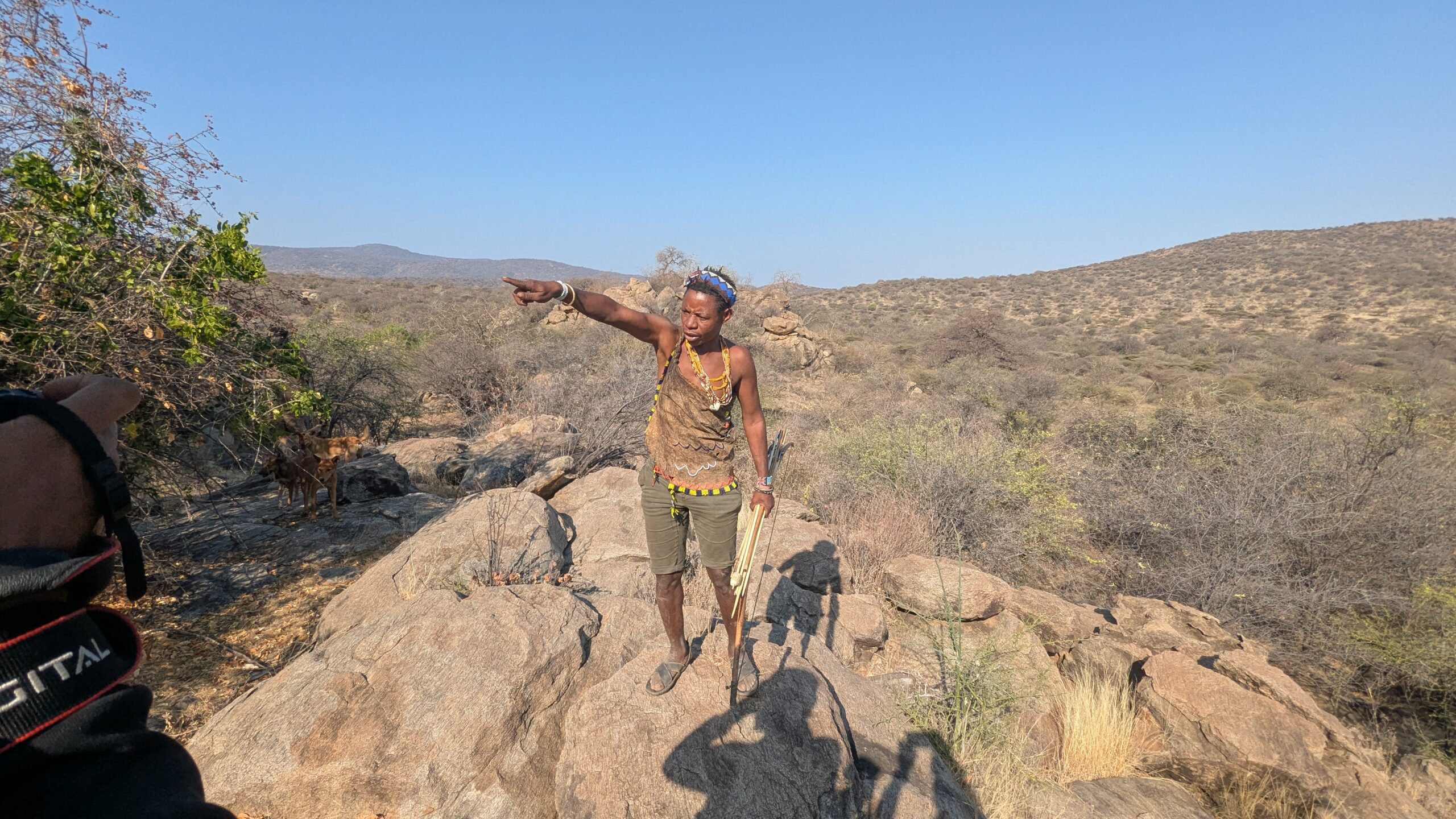
Fake and staged videos are putting Hadzabe faces into stories that never happened. In the Eyasi Valley, community leaders say the damage reaches their identity, their consent and the tourism that feeds their families.
By Isack Dickson
“That is not me.”
Imagine saying those words about your own face.
A video is moving from phone to phone. It shows you, or someone who looks like you, doing something you have never done. People watch it, share it and begin to believe it. When someone asks you about it, you find yourself defending yourself against an act you never committed.
For members of Tanzania’s Hadzabe community in the Eyasi Valley, Karatu District, this is becoming a troubling reality. Videos carrying their faces and cultural identities circulate online, and some appear to use artificial intelligence (AI) to create scenes that the people shown say never happened.
The questions reach far beyond one village: truth, identity, consent, and the responsibility of everyone who creates and shares digital material about Indigenous communities.
“That is not me”: when a real face tells a false story
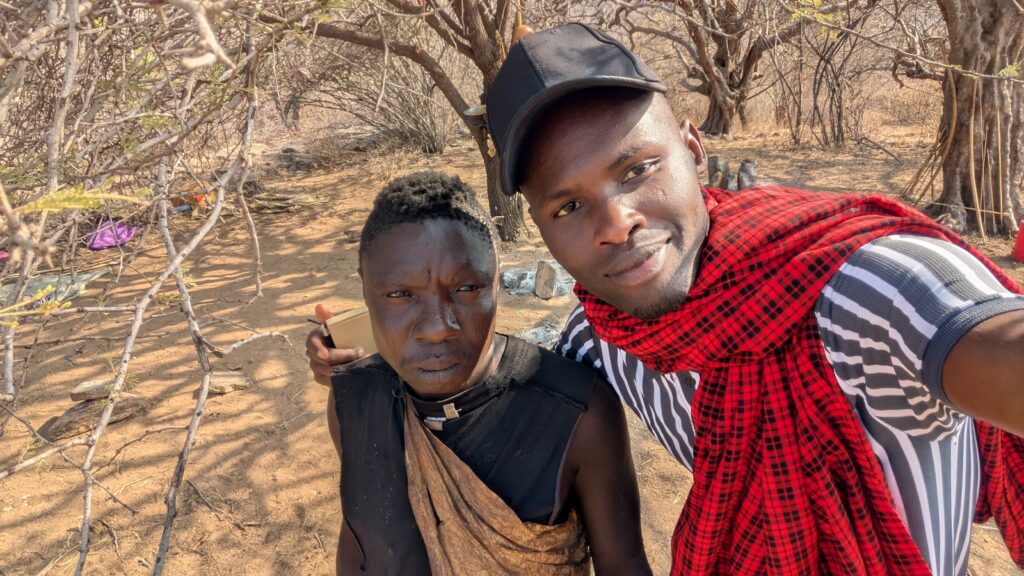
Chaba is a young man from the Hadzabe community, and his videos circulate online. One of them, he says, showed him eating a leopard. He disputes it. The scene, he says, did not reflect anything he had experienced.
“I have never seen that. They brought it to us and made us do it. That is not me. They created it. Nowadays, there are no leopards in this area,” he says.
His case shows a challenge of the digital age: a real person’s face can be attached to an invented story, and audiences are left unsure what actually happened.
AI tools can generate text, images, audio and video. They can create scenes that were never recorded, or alter footage that was. People can appear to say or do things they have never said or done.
But not every video of an Indigenous person is fake, and not every misleading video comes from AI. Some creators visit communities, stage scenes with real people, and publish them without explaining that the events were arranged.
The task for viewers is to tell authentic documentation from fabricated or misleading portrayals, especially when they know little about the people on screen.
Chaba’s experience separates two things: a person’s face and the story attached to it. The face may be real, while the clothes, vehicle, location or action around it are invented.
For communities that outsiders meet mostly through photographs, videos and online stories, such images can shape how the world sees their culture and daily lives. A fabricated scene can be treated as evidence, especially when it is shared again and again without explanation.
Msafiri, chairperson of the Hadzabe community, says some members at first did not fully understand how these videos were made and spread.
“In the past, we did not know what was happening with these videos. We thought someone was simply coming to tell us to do something. They would give us money, and we would participate,” he says.
“Later, we began to realise that we were appearing on phones, in videos and elsewhere. This is very bad for the community. We did not understand what it meant, but now we want it stopped and want the government to help us.”
Msafiri says he has seen images of himself in situations that never happened. In one, he appeared to be drawing a bow at a buffalo, though he says he was never in such a situation. In others he wore a suit and sat in an expensive car.
“The truth is not there. It is all lies,” he says.
“I asked myself when I had ever done those things. I have never had that experience.”
He wonders how people can create images that put him in unfamiliar situations and make them look real.
His worry goes beyond personal discomfort. When a person is shown doing something that contradicts how audiences understand their community, viewers may draw conclusions without checking whether it happened. The person shown can then be blamed, ridiculed or misunderstood for a scene they never created.
Msafiri also fears the effect on visitors.
“If a visitor sees Chaba in a suit and driving a car, they may think they already know what he is like. They may decide there is no reason to come and see us,” he says.
What happens when an online image becomes a substitute for meeting people in person?
Staged scenes: AI is not the only problem
Felix Togolai, the Eyasi ward officer, says he has seen AI-generated videos of well-known Hadzabe individuals, including Chaba and Dudu, in situations that do not match the reality he knows.
“They are shown wearing suits, driving cars or even flying planes. When you look at them carefully, the situations are not realistic. They have been created using these technological systems,” he says.
He points to a second problem: content creators who visit the area and persuade community members to take part in staged scenes.
The difference matters. A video can mislead even when it is shot with a real camera and real people. If a staged event is presented as ordinary community life, viewers misunderstand what they see.
Togolai says contact with outsiders can shape how community life is shown. A creator may bring soft drinks or particular foods and film people consuming them in a way that suggests they are traditional parts of Hadzabe culture. He cautions against mistaking such scenes for customary practice.
This does not mean Hadzabe people should be kept from trying new foods, wearing different clothes or adopting new ways of life. Like any community, they have the right to make their own choices and to change over time.
The concern begins when a staged activity is passed off as an accurate account of culture, without the context viewers need.
Communities are not frozen in the past. Education, economic conditions, social contact and environmental change all shape how people live. Responsible reporting has to recognise that, rather than suggest Indigenous people must look or behave a certain way to be “authentic.”
Can misleading videos hurt Hadzabe tourism in Eyasi?
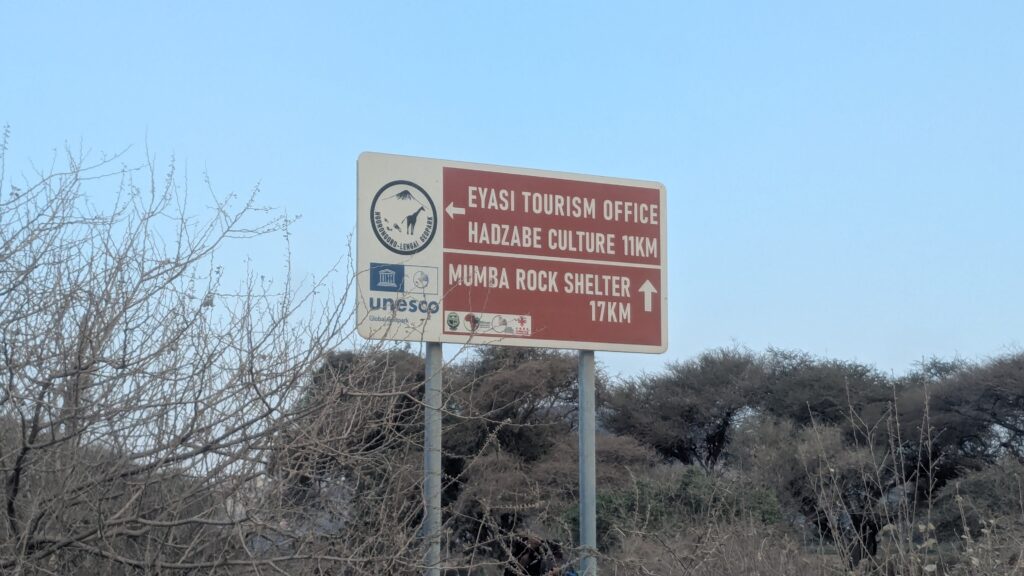
The Eyasi Valley draws visitors who want to learn about Indigenous communities, including the Hadzabe. For some families, cultural tourism brings in income that covers everyday needs.
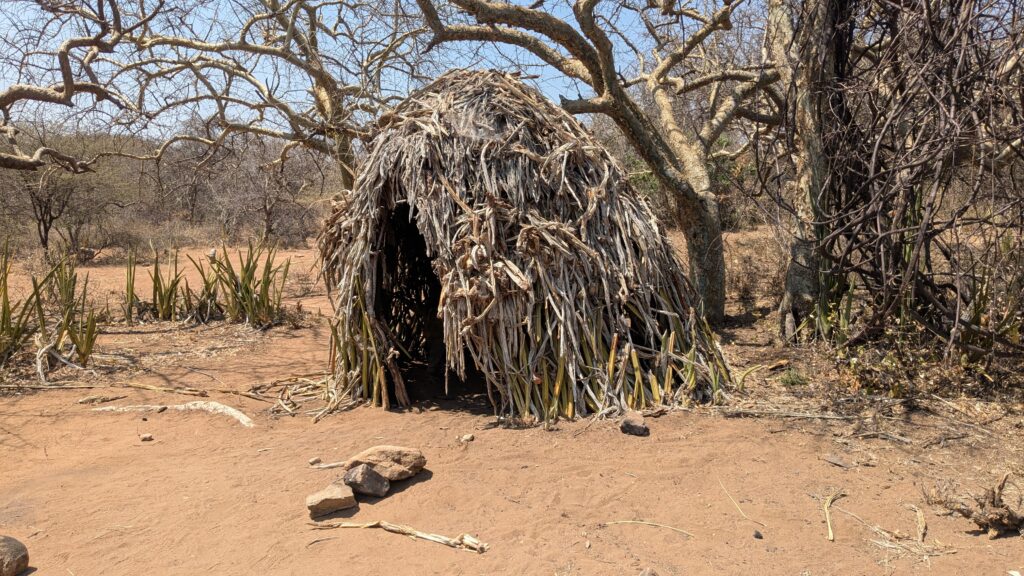
Rogath Paulo, the executive officer of Qang’dend village, says tourism revenue supports food, education and healthcare for community members.
Visitors pay US$20 at the entry gate and a further US$20 at the camp (boma) they visit. Paulo describes what happens next:
“At the end of the month, the revenue is calculated and distributed among the camps to help provide food, school requirements and healthcare,” he says.
When families depend on visitors, the way they are shown online matters. If videos leave audiences feeling they have already seen everything about a community, some may lose interest in visiting in person. On the other hand, accurate and respectful content can introduce people to Indigenous cultures and encourage them to come.
Babu, the secretary of the Hadzabe community, says some online content presents their lives inaccurately, though he acknowledges that some creators represent the community well.
“Not all of these videos explain the real lives of the Hadzabe. Some people produce good content and show our origins and way of life, but others misrepresent our culture and values,” he says.
Babu believes visitor numbers have fallen compared with previous years. He puts the drop at around 50 per cent and worries that misleading online videos may be part of the reason.
That figure is his personal estimate, not verified tourism data. Without reliable visitor records and further investigation, it is not possible to establish the scale of any decline or to say whether AI-generated videos caused it. Other factors may play a part, and the link between online content and visitor numbers needs more evidence.
Yasinta Sulle, a revenue collector working with the Datoga community, offers a complementary view. Well-produced content, she says, can promote both domestic and international tourism.
“When content is produced well, it promotes tourism at home and abroad. Some information is true, while other information is not,” she says.
Online video can help people discover places, learn about communities and want to visit. The real question is not whether content attracts attention, but whether it informs audiences accurately and respects the people it portrays.
Consent: who owns a face online?
The Hadzabe community’s concerns point straight to informed consent.
When people agree to appear in a video, they should understand what they are taking part in and how the footage may be used. Being filmed in one setting does not mean agreeing to have their image altered, placed in a fabricated scenario or shared with a misleading description.
Consent matters most when content will reach audiences far from where it was recorded. Once published, a video can be copied, edited and shared again and again, and the people in it struggle to correct the false impression.
Creators should explain the purpose of a recording, avoid misleading participants about how it will be used, and be open when scenes are staged or generated with AI. They should also ask whether a publication could expose someone to ridicule or reputational harm.
For Indigenous communities, these questions are tied to who holds the power to tell their stories. Hadzabe people should be able to explain their own lives, point out inaccuracies and raise concerns about how their identities are used.
That does not mean only community members may tell these stories. Journalists, researchers and other creators can add valuable reporting. But the work should be accurate, contextualised and respectful of the people involved.
What does the law say, and who is responsible?

Karatu District Commissioner Dr Lameck Karanga says the government knows about some online content made by people outside Tanzania. He says authorities have been stepping up oversight of cultural tourism, including checking the permits required to enter the relevant areas.
“Some of the content has been produced by creators who are not in Tanzania, and the government is aware of it,” he says.
Karanga says district authorities must protect the community without needlessly damaging tourism. He also asks journalists to help raise awareness of practices that misrepresent the Hadzabe.
Tanzania has rules for online content. The 2025 amendments to the Electronic and Postal Communications (Online Content) Regulations include provisions on certain prohibited content, including fabricated and AI-generated material.
That does not make every AI-generated video unlawful. The circumstances, the nature of the content and the specific legal provisions all matter. Anyone who wants to report harmful material should consult the relevant authorities or a qualified legal professional.
People who come across misleading content can save the link, record where and when it appeared, and report it to the platform. Where someone’s likeness was used without consent, or the content may cause serious harm, they may also need guidance from the authorities.
Platforms and creators share responsibility for slowing deceptive material. Labels saying a scene is fictional or AI-generated help audiences understand what they are watching, but only when the labels are clear, accurate and visible.
Media organisations have a role too. Journalists can verify where a video came from, contact the people in it, seek independent confirmation, and explain what is known and what is still uncertain.
Who tells the Hadzabe story?
Paulo says social media creators can change how the Hadzabe are seen by showing them in modern settings that may not reflect the context in which a video was filmed.
“Change is happening, and we have to accept it. As the years pass and globalisation grows, communities change through interaction with different people,” he says. “Some content creators go there and stage things, taking people away from the reality of how they live and dressing them in modern styles.”
His words raise a hard question: who decides how an Indigenous community should be represented?
The answer cannot be that Hadzabe people must always look the way they did in the past. They have the same right as anyone to change, to adopt new technology, to choose different clothes and to shape their own future.
But that right is not permission for others to invent events, manipulate their likenesses or pass off made-up scenes as fact.
Chaba’s experience is a reminder that a real face can be used to tell a story that does not belong to the person shown. AI can open new ways to communicate, but it should not take away people’s chance to identify themselves and explain their own lives.
For audiences, the lesson is this: a video on your phone is not proof that something happened. Question the source, look for corroboration, and do not share what you cannot verify.
For creators, the duty is to separate fact from fiction, respect the people they portray, and stop using cultural identities as a tool for views.
For authorities and media organisations, the challenge is to support accountability while making sure communities know their rights and have practical ways to respond when their images are misused.
For the Hadzabe, the issue is not only how they appear online. It is whether they have a real voice in the stories told about them.